
Free AI Courses 2026: Selection Guide & Effective Learning Path
- Group: CONQ030
- Class: AI Vietnam – AIO 2026
- Students: Nguyễn Chơn Nhân, Phạm Vĩnh Nghi, Phan Nguyễn Hà Việt, Nguyễn Kim Thư, Nguyễn Hoàng Phương Thảo, Thái Ngọc Rạng
- Updated: January 17, 2026

Figure 1. Comparison table of the 11 best free AI courses in 2026. Source: gettyimages
📋 Main Content
- The Sea of Courses and the Fear of Learning Wrong
- What Does "Free" Mean in AI Courses?
- The "Golden" Criteria Set and Course Selection Checklist
- The 11 Best Free AI Courses in 2026 [Detailed Comparison]
- A 4-Stage AI Learning Path for Beginners
- 4 Common Pitfalls and How to Avoid Them
- FAQ - Frequently Asked Questions About Learning AI for Free
- Start Your AI Learning Journey Today
1. The "Sea of Courses" and the Fear of Learning Wrong
Search for "free AI courses" or "khóa học AI miễn phí", and you'll see thousands of results from Coursera, edX, YouTube, Kaggle... The problem is no longer "can I learn?", but rather:
- Which one should I learn first? General AI, foundational ML, or jump straight into GenAI?
- Is learning for free enough? Or do I need to pay to get something "worthwhile"?
- Will I be able to apply it after finishing? Or will it just be another course added to the "enrolled and abandoned" list?
This article addresses that exact bottleneck: the mindset for choosing courses and a logical learning path for beginners, accompanied by in-depth reviews of 11 top courses.
2. What Does "Free" Mean in AI Courses?
The word "free" in online learning often has three layers of meaning. Without distinguishing them, you can easily have the wrong expectations.
2.1. Completely Free (Free full access)
- Access all content, do exercises, receive resources, usually often less structured, more self-directed or a rigid learning path.
- Certification: May not be available, or is not the main goal.
2.2. Audit Free (Free content, pay for certificate)
- Access to all videos/materials.
- Certificate / Graded Assignments: Usually require payment.
2.3. Limited Free Access (Freemium / Trial)
- Free access to the first few lessons, or access for a limited time.
- Risk: If you learn slowly, you might... run out of time.
Important Conclusion: For beginners, the goal of learning for free is to build a foundation + test the right direction, not to "collect certificates."
3. The "Golden" Criteria Set and Course Selection Checklist
Before you click Enroll, evaluate the course through the filter below. The more "time you invest" in choosing, the more time you'll save later.
3.1. Checklist: 12 Criteria for Selecting a Quality AI Course
Content & Structure
- [ ] Clear Objectives: The course clearly states learning outcomes and real-world applications.
- [ ] Sequential Learning Path: From basic to advanced, no skipping around.
- [ ] Updated Content (post-2023): Reflects new tools, frameworks, and trends (PyTorch 2.x, TensorFlow 2, Transformer).
Teaching & Support
- [ ] Reputable Instructor? Has an academic background (Professor, PhD) or experience at major companies (Google, Meta, Microsoft).
- [ ] Active Support Community? Has a forum, Discord, Slack for discussion when facing issues.
- [ ] Easy-to-Understand Style: Visual lectures, illustrative examples, not overly academic.
Practice & Assessment
- [ ] Includes Hands-on Exercises? Provides notebooks (Jupyter/Colab), coding assignments, small projects.
- [ ] Includes Knowledge Assessment? Has quizzes, assignments, or a final project.
- [ ] Complete Resources: Includes slides, sample code, datasets for self-experimentation.
Personalization
- [ ] Appropriate Level: Designed for Beginner/Intermediate/Advanced matching your level.
- [ ] Aligns with Goals: Focuses on the skills you need (foundational ML, NLP, CV).
- [ ] Fits Your Schedule: You can dedicate the recommended time commitment.
Tip: If a course only meets ≤ 50% of the criteria, consider finding a more suitable one.
4. The 11 Best Free AI Courses in 2026 [Detailed Comparison]
4.1. Quick Comparison Table (Decide in 60 seconds)
| Course | Suitable Audience | Path Rating | Practice Rating | Key Strengths | Important Notes |
|---|---|---|---|---|---|
| AI for Everyone | Complete beginner | ⭐⭐⭐⭐ | ⭐ | Correct AI awareness, business perspective | No coding |
| Elements of AI | Beginner, non-technical | ⭐⭐⭐⭐⭐ | ⭐⭐ | AI thinking & ethics, no coding needed | Lacks technical depth |
| Microsoft AI For Beginners | Beginner (basic Python needed) | ⭐⭐⭐⭐⭐ | ⭐⭐⭐⭐⭐ | Comprehensive 12-week path, parallel PyTorch/TF code | Heavy content load |
| CS50's Intro to AI with Python | Has basic Python foundation | ⭐⭐⭐⭐⭐ | ⭐⭐⭐⭐⭐ | High-quality algorithm exercises, deep thinking | Challenging, requires significant coding |
| Google ML Crash Course | Has light foundational knowledge | ⭐⭐⭐⭐ | ⭐⭐⭐⭐ | "Industry-standard" ML practice, fast-paced | Light on foundational theory, fast pace |
| fast.ai Practical Deep Learning | Has Python, wants to start fast | ⭐⭐⭐ | ⭐⭐⭐⭐⭐ | Project-based learning, "code first, theory later" | Requires self-discipline, less structure |
| Kaggle Learn | Beginner starting out | ⭐⭐⭐ | ⭐⭐⭐⭐ | Quick learning via notebooks, badges available | Can lead to fragmented learning, lacks system |
| Hugging Face Course | Intermediate (needs ML basics) | ⭐⭐⭐⭐ | ⭐⭐⭐⭐ | Most practical Transformers hands-on | Focuses deeply on NLP |
| MIT OCW Intro to Deep Learning | Intermediate, research-oriented | ⭐⭐⭐⭐⭐ | ⭐⭐⭐ | Rigorous DL theory, clear mathematics | Academic, less step-by-step coding guide |
| IBM AI Engineering (audit) | Intermediate, wants synthesis | ⭐⭐⭐⭐ | ⭐⭐⭐⭐ | Covers many areas, includes projects | Certificate requires payment, broad content |
| Stanford CS229 | Intermediate → Advanced | ⭐⭐⭐⭐⭐ | ⭐⭐ | Deep ML foundations, heavy on math | Very theory-heavy, less hands-on coding |
4.2. Courses for Complete Beginners (No coding needed)
A. AI for Everyone (DeepLearning.AI – Andrew Ng)
Figure 2. Illustration of the AI for Everyone course. Source: Montreal Ethics Institute.
- Elevator Pitch: Decodes AI for non-technical people. Understand the nature, project workflow, opportunities, and ethical risks.
- Learn if: You are a PM, BA, Marketer... wanting to work effectively with AI teams.
- Warning: Almost no code or math.
B. Elements of AI (University of Helsinki & MinnaLearn)
- Elevator Pitch: "Democratizing" AI knowledge. Finland's national course, focusing on critical thinking and societal impact.
- Learn if: You are completely new, afraid of code/math, or work in a non-technical field.
- Big Plus: Free certificate from the University of Helsinki.
4.3. Courses with Structured Path & Deep Hands-on Practice (Requires Python)
C. Microsoft AI For Beginners
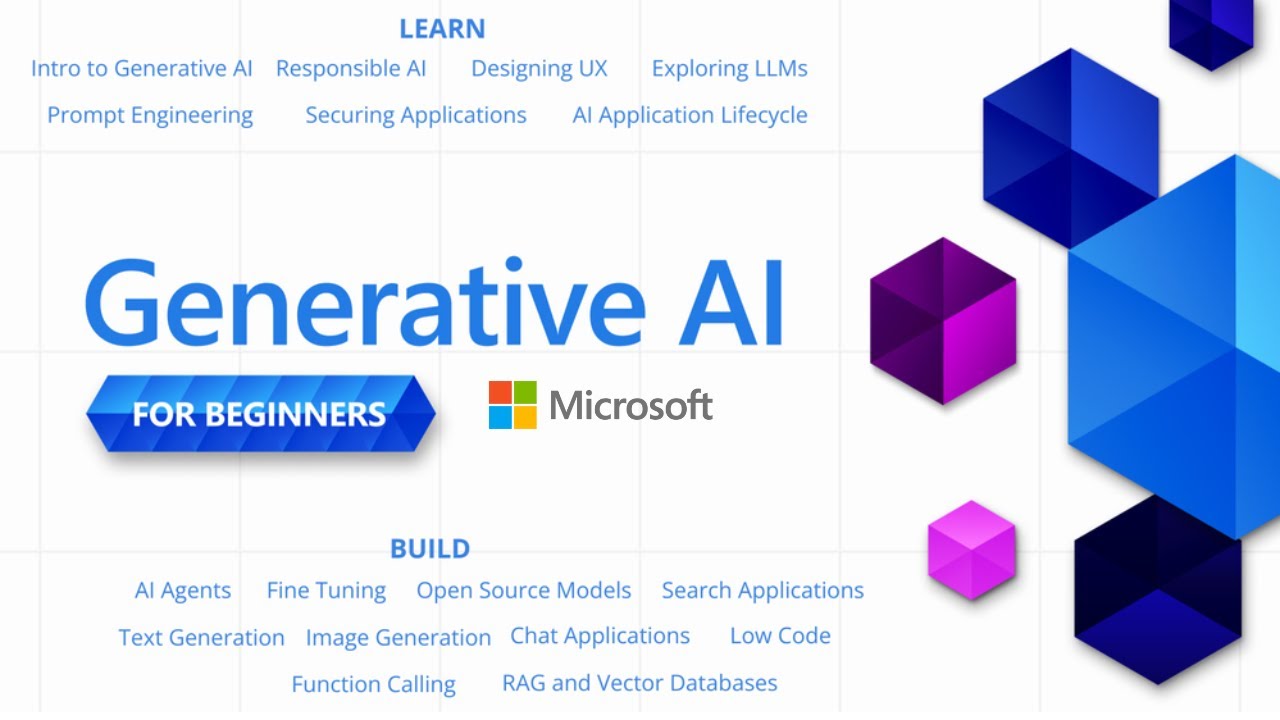
Figure 3. Illustration of the Microsoft AI for Beginners course. Source: Microsoft AI for Beginners.
- Expert Review: The most comprehensive curriculum (12 weeks). Covers Symbolic AI, Neural Networks, to CV, NLP, Generative AI. "Bottom-up" method (build simple framework first), parallel PyTorch & TensorFlow code, visual Sketchnotes.
- Suitable for: IT students, career changers wanting a solid foundation in both theory and practice.
- Community: Official Discord and GitHub Issues provide good support.
D. CS50's Introduction to AI with Python (Harvard)
- Expert Review: A serious university-style course. You'll code from search algorithms, optimization, to basic ML and Neural Networks. Focuses on understanding algorithm fundamentals.
- Suitable for: Those who already know Python and enjoy learning through challenging, problem-solving assignments.
- Tip: Aim for one assignment per week, read the spec carefully before looking for answers.
4.4. Practical Courses, Learn Fast and Apply Immediately
E. Google Machine Learning Crash Course
- Expert Review: Teaches practical ML workflow with TensorFlow/Keras. Focuses on using high-level APIs, visual explanations of concepts (like gradient descent). Perfect for building your first model.
- Warning: Fast pace, requires brushing up on probability/statistics if not solid.
F. fast.ai – Practical Deep Learning for Coders
- Expert Review: "Top-down" philosophy (code first). Uses the
fastailibrary (built on PyTorch) to build powerful vision/NLP models from the very first lesson, creating huge motivation. - Suitable for: Those with high self-learning spirit, wanting to see quick results.
- Note: Easy to have foundational gaps if not actively reviewing theory.
4.5. Specialized In-Depth Courses by Topic
G. Hugging Face Course – NLP & Transformers
- Expert Review: The most practical course for working with Transformer models (BERT, GPT...). Learn how to finetune, evaluate, and deploy models using the
transformerslibrary. - Mandatory Prerequisites: Basic understanding of training loops, loss functions, evaluation metrics in ML.
H. MIT OCW Intro to Deep Learning & Stanford Online
- Expert Review (General): Deep and rigorous theory from top professors. Understand the mathematical essence behind models.
- Common Disadvantages: Lacks a path for complete beginners, requires self-guidance. Practice is research-oriented.
- Suitable for: Those with research aspirations, graduate students, or those with a foundation wanting deep conceptual understanding.
5. A 4-Stage AI Learning Path for Beginners
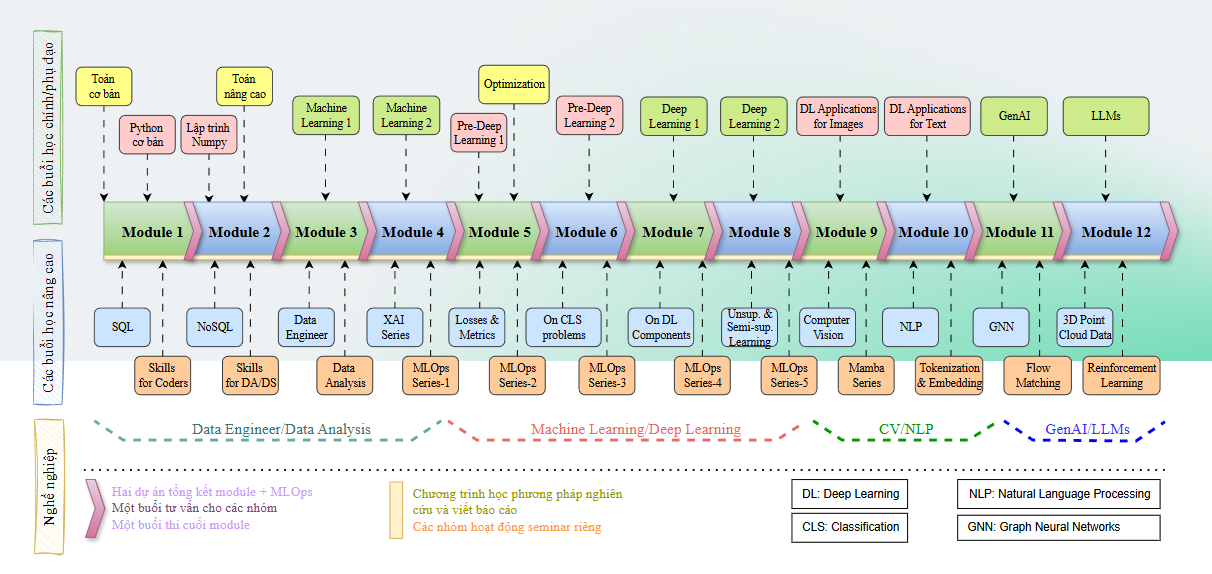
Figure 4. A four-stage AI learning roadmap for beginners. Source: AIO2026
Goal: Progress from awareness → foundation → practice → specialization, avoiding "skipping" which kills motivation.
| Stage | Goal | Time | Suggested Main Course |
|---|---|---|---|
| 1. Awareness | Understand the differences between AI/ML/DL/GenAI | 1-3 days | AI for Everyone (DeepLearning.AI) |
| 2. Foundation | Python + Data Processing (Pandas) + ML Thinking | 2-4 weeks | Kaggle Learn (Python → Pandas → Intro to ML) |
| 3. ML Practice | Understand ML workflow, build your first model | 2-4 weeks | Google ML Crash Course |
| 4. Specialization | Choose one branch to deepen | 4-8 weeks | NLP: Hugging Face Course DL Foundation: MIT OCW Intro to DL Structured: CS50 AI with Python |
Advice: When self-learning, create a similar personal roadmap with specific timelines to avoid fragmented learning.
6. 4 Common Pitfalls and How to Avoid Them
6.1. Pitfall 1: "Getting a certificate after finishing is enough"
- Reality: Employers care more about practical projects and problem-solving ability than certificates.
- How to Avoid: Prioritize courses with assignments/projects. Build a personal portfolio on GitHub.
6.2. Pitfall 2: Fragmented, unsystematic learning
- Consequence: Scattered knowledge, unable to connect concepts to solve complex problems.
- How to Avoid: Apply the rule of "1 main course + 1 supporting micro-course". Or choose an integrated path like Microsoft AI For Beginners.
6.3. Pitfall 3: Language barrier (English)
- Solution: Use subtitles, note down "technical keywords" instead of translating every sentence. For AI, English is a long-term advantage as materials are updated fastest in English.
6.4. Pitfall 4: Jumping straight into advanced AI without foundation
- Risk: Cannot understand why models hallucinate, have bias, or finetuning fails.
- How to Avoid: ABSOLUTELY complete Stages 2 & 3 of the learning path before touching Transformers/Hugging Face.
7. FAQ - Frequently Asked Questions About Learning AI for Free
Is learning AI for free enough to get a job?
It's possible. Necessary conditions: (1) Complete a systematic learning path, (2) Have 3-5 real projects in your portfolio, (3) Contribute to the community (GitHub, Kaggle). Practical skills are more important than certificates.
*Note that these are necessary conditions, not sufficient ones.
How long does it take to learn AI from scratch?
- Basic Foundation (Python + ML): 2-3 months (10-15 hours/week).
- Intermediate (Deep Learning): Additional 2-3 months.
- Specialization (NLP/CV): Additional 3-4 months.
- Total Estimated Time: 6-10 months to reach a Junior level.
(These figures are for reference only, completion time depends on individual capacity and conditions)
Which free AI course is best for beginners?
Top 3 recommendations:
1. AI for Everyone (DeepLearning.AI): No code needed, builds correct awareness.
2. Microsoft AI For Beginners: Comprehensive 12-week path, deep practice.
3. Elements of AI: Builds comprehensive and human-centric AI thinking.
Do I need to be good at Math to learn AI?
You don't need to be "good" right away. You need basic knowledge of: (1) Linear Algebra (matrices, vectors), (2) Probability & Statistics, (3) Calculus (derivatives). Can be learned alongside projects.
Do free AI courses offer certificates?
- Yes: Some courses offer free certificates (Elements of AI, Kaggle badges).
- No: Most audit courses on Coursera/edX are free for content only, certificates require payment. Consider your learning goal when choosing.
8. Start Your AI Learning Journey Today
Learning AI for free is not "inferior". The problem lies in choosing the wrong course, lacking a learning path, and insufficient practice.
Take action right now:
- Step 1: Use the Checklist in section 3.1 to evaluate a course you are interested in.
- Step 2: Choose ONE most suitable course from the 11 courses in section 4.
- Step 3: Create a personal 4-stage learning path with a specific schedule.
- Step 4: Join the community (Discord, Forum) of that course for support.
📚 References & Useful Links:
* Microsoft AI For Beginners
* Elements of AI
* Google ML Crash Course
* Kaggle Learn
* Hugging Face Course
📚 Nguồn ảnh:
* AI_img
* AI_for_Everyone_img
Chưa có bình luận nào. Hãy là người đầu tiên!